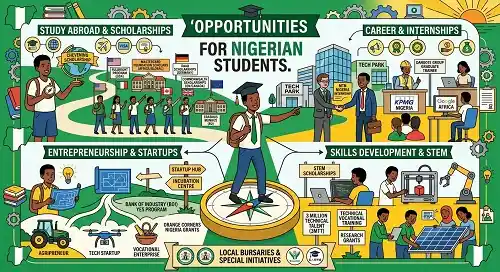
Fully funded scholarships for Nigerian students in Europe 2026. Complete Guide to Fully Funded Opportunities. Europe continues to be one of the most rewarding destinations for Nigerian students seeking a fully funded scholarship that covers tuition, living costs, and provides a genuine immigration pathway to long-term residence. With dozens of government-backed and university-funded programs available in 2026, international students from Nigeria have more options than ever before to study in world-class institutions across the continent.
Many of these programs also include study visa sponsorship, making it significantly easier for eligible applicants to obtain a legal entry into their chosen European country. Whether you are aiming for Germany, the Netherlands, France, or Scandinavia, this guide covers everything you need to know to apply successfully.
| Field | Details |
|---|---|
| Scholarship Name | Multiple European Government and University Scholarships 2026 |
| Host Country | Germany, Netherlands, France, Sweden, Norway, Denmark, Italy, Spain, Belgium, Austria |
| Eligible Nationalities | Nigerian students (and other African nationalities depending on program) |
| Study Level | Undergraduate, Masters, PhD, Postdoctoral |
| Scholarship Type | Fully Funded, Partial, Merit-Based, Need-Based |
| Funding Coverage | Tuition, stipend, accommodation, airfare, health insurance (varies by program) |
| Application Deadline | Varies |
| Official Website Link | daad.de | studyineurope.eu | scholarshipportal.com |
2. Complete Financial Benefits and Cost Breakdown
Understanding the financial coverage of European scholarships is critical before you begin your application, especially for Nigerian students who are exploring education loan alternatives and trying to reduce their financial burden abroad. Most fully funded programs in Europe are genuinely generous and cover far more than just tuition, which makes them a superior choice over expensive student finance options from private lenders. Programs like the DAAD Scholarship in Germany, the Erasmus Mundus program, and the Netherlands Fellowship provide financial aid for international students that goes well beyond what most people expect. Here is a detailed breakdown of what leading European scholarships typically offer in 2026.
| Benefit | Amount or Details |
|---|---|
| Full Tuition Fee Waiver | Up to €15,000–€30,000 per year depending on program |
| Monthly Living Stipend | €850–€1,200 per month (varies by country) |
| University Accommodation | Free or subsidized on-campus housing |
| Annual Return Airfare | Economy class return ticket (Lagos or Abuja to Europe) |
| Health and Medical Insurance | Full coverage or €500–€1,000 annual subsidy |
| Research or Book Allowance | €500–€2,000 annually for academic materials |
| Visa Fee Reimbursement | Included in some programs (e.g., DAAD, Erasmus) |
| Family Allowance | €250–€400/month for married scholars with dependents (select programs) |
Students who do not secure a fully funded award can explore international student loans, education financing from banks like GTBank, Access Bank, or international lenders like Prodigy Finance, and partial scholarship combinations alongside teaching assistantships or research bursaries to cover any remaining costs during their studies.
3. Why You Need an Immigration Consultant or Education Advisor
Many Nigerian students underestimate how complex the European study visa and scholarship application process can be, and working with a qualified immigration consultant or education advisor can genuinely increase your chances of success by a significant margin. Immigration lawyers can help you navigate visa rejection appeals, handle document verification processes, and begin planning your PR pathway from the very first day you arrive in Europe — not just at the end of your studies.
A large number of students hire student visa consultants specifically to avoid common but costly mistakes such as submitting documents in the wrong format, choosing the wrong visa category, or missing critical embassy deadlines. An international student recruitment agency can also take on a broader role by helping with university shortlisting, preparing your application essays, submitting forms before deadlines, and supporting the full visa filing process. Investing in professional guidance early in the process is not an expense — it is one of the smartest financial decisions a Nigerian student can make when planning to study abroad.
4. Available Study Programs for International Students
European universities offer an extraordinarily wide range of programs for international students, and Nigerian applicants in 2026 will find opportunities in virtually every academic discipline — from STEM fields to humanities and the arts. The availability of programs in English across Germany, the Netherlands, Sweden, and Ireland has made it dramatically easier for Nigerian students to study without learning a second language first. Many scholarship programs are tied to specific disciplines, so selecting the right field can also maximize your funding options.
Computer Science and Artificial Intelligence
Computer Science and AI remain among the most in-demand disciplines at European universities, with graduates earning between €50,000 and €90,000 annually in countries like Germany and the Netherlands. Nigerian students with strong STEM backgrounds are actively sought by universities in Berlin, Amsterdam, and Stockholm. Many scholarships, including DAAD and Erasmus Mundus, specifically fund AI and technology programs given the European digital economy’s need for skilled graduates.
Medicine and Healthcare
Medicine is one of the most competitive but rewarding fields to study in Europe, with qualified doctors earning between €70,000 and €130,000 per year depending on specialization and country. Several Eastern European countries including Hungary and Poland offer English-medium medical degrees at relatively low tuition costs, making them attractive options for Nigerian students. Post-graduation, a skilled worker visa is readily available for healthcare professionals across the EU.
Business Administration and MBA
Business and MBA programs in Europe attract tens of thousands of international students each year, and Nigerian applicants with work experience are particularly competitive for funded programs at institutions in the UK, France, and Germany. Graduates of top European MBA programs regularly enter salaries of €60,000–€100,000 in multinational corporations. The INSEAD and HEC Paris scholarships are among the most prestigious available for African students in 2026.
Civil and Mechanical Engineering
Engineering graduates are in acute shortage across Europe, and Nigerian engineers with European degrees are exceptionally well-positioned for the job market. Civil and mechanical engineers in Germany and the Netherlands can expect starting salaries between €45,000 and €70,000 annually. Multiple DAAD and Erasmus programs specifically fund engineering disciplines due to industry demand.
Law and International Relations
Studying law or international relations in Europe opens doors to careers in diplomacy, international organizations such as the United Nations and the African Union, and high-paying private law firms. Graduates of European law programs can pursue LL.M. degrees followed by careers earning €55,000–€90,000 in international legal practice. Nigerian students interested in human rights law, trade law, or EU law will find particularly strong programs in the Netherlands and Belgium.
Environmental Science and Sustainability
With climate change at the top of the European political agenda, environmental science graduates are among the most employable in the EU job market right now. Salaries for environmental specialists range from €40,000 to €65,000 in Western Europe, with opportunities in government agencies, NGOs, and private sustainability consultancies. Norway and Sweden offer outstanding funded programs in this field for international students.
Data Science and Analytics
Data science is consistently ranked among the top three most in-demand skills in Europe, and universities across the continent have expanded their data programs significantly in recent years. Nigerian graduates in data science can expect starting salaries of €50,000–€80,000, particularly in financial technology and e-commerce sectors. Many Erasmus Mundus scholarships now include joint data science programs across two or three European universities.
Education and Teaching
Education degrees from European universities are globally recognized and open pathways to teaching careers both in Europe and internationally. Teachers in Western Europe earn between €35,000 and €60,000 annually, with experienced educators at international schools earning considerably more. Several Scandinavian countries actively recruit internationally trained teachers and offer streamlined work permit pathways for education graduates.
Architecture and Urban Planning
European universities are world leaders in architecture and urban design education, and Nigerian students who graduate from programs in Germany, Italy, or the Netherlands find strong demand for their skills both in Europe and back home. Architects in Europe earn between €40,000 and €75,000 depending on experience and country. Several Italian and Spanish universities offer partial scholarship programs specifically for African architecture students.
Economics and Finance
Economics and finance degrees from European universities carry exceptional prestige in the global job market, and Nigerian graduates find excellent opportunities in banking, policy analysis, and international development finance. Starting salaries in finance roles in Germany and the UK range from €45,000 to €80,000. The African Development Bank and World Bank actively recruit Nigerian graduates of European economics programs, making this a particularly strategic choice.
5. Top Universities in Europe for Nigerian International Students
Choosing the right university is just as important as choosing the right scholarship, and university admission consultants can play a crucial role in helping Nigerian students identify programs where their academic profile is genuinely competitive. European universities vary enormously in their acceptance rates, tuition fees, and scholarship availability, so doing your research carefully pays enormous dividends. Below are eight of the most internationally respected universities in Europe that actively welcome and support Nigerian students.
University of Amsterdam – Netherlands
Located in one of Europe’s most vibrant cities, the University of Amsterdam ranks consistently in the global top 60 and offers over 200 English-taught programs. Acceptance rate for international students is approximately 35–45% depending on the program. Tuition for non-EU students ranges from €8,000 to €20,000 per year, and the Holland Scholarship covers partial tuition for eligible Nigerian applicants.
Ludwig Maximilian University of Munich (LMU) – Germany
LMU Munich is one of Germany’s most prestigious universities and ranks in the global top 50. International student acceptance rates vary but the university actively recruits high-achieving African students. Many programs are tuition-free for all students regardless of nationality, and DAAD scholarships are readily available for Nigerian postgraduate applicants.
Uppsala University – Sweden
Uppsala is Scandinavia’s oldest university and offers a highly internationalized campus environment with strong scholarship support for African students. Tuition fees for non-EU students range from SEK 80,000 to SEK 145,000 per year. The Swedish Institute Scholarship for Global Professionals covers full tuition and living costs and is open to Nigerian applicants.
KU Leuven – Belgium
KU Leuven consistently ranks in the global top 50 and is one of the most research-intensive universities in Europe. International student fees range from €900 to €10,000 per year depending on program. KU Leuven offers internal merit scholarships and is a partner in several Erasmus Mundus programs relevant to Nigerian students.
University of Bologna – Italy
As Europe’s oldest university, Bologna offers exceptional academic programs combined with one of the most affordable study destinations on the continent. Tuition fees range from €1,400 to €3,500 per year, and the university offers need-based fee waivers for students from developing countries. The ERGo regional scholarship provides additional financial support for Nigerian students demonstrating financial need.
Paris-Saclay University – France
Paris-Saclay is ranked among the top 15 universities in the world in certain subject rankings and is particularly strong in engineering, mathematics, and natural sciences. Nigerian students can access the Eiffel Excellence Scholarship Programme, which is one of France’s most generous awards for international master’s and doctoral students. Tuition fees at French public universities are subsidized and among the lowest in Western Europe.
University of Oslo – Norway
The University of Oslo offers tuition-free education for all students, including international students from Nigeria, making it one of the most financially attractive options in Europe. The Norwegian Government Quota Scholarship is specifically available for students from developing countries. Living costs are higher in Norway than in most European countries, but several institutional grants help offset this for scholarship holders.
Maastricht University – Netherlands
Maastricht is internationally recognized for its problem-based learning approach and has one of the highest proportions of international students of any European university. Tuition fees range from €8,000 to €16,000 per year for non-EU students. The Maastricht University Holland Scholarship and Huygens Scholarship Programme are both accessible to Nigerian applicants with strong academic records.
6. How to Choose the Right Education Consultant for Europe
The education consulting industry has expanded rapidly in Nigeria, and while many agencies provide genuine, high-quality guidance, a significant number of unregistered or poorly qualified consultants cause real harm to students through incorrect advice, fake documents, or mishandled visa applications. When selecting an education consultant for Europe, you should always verify whether the agency holds recognized credentials from bodies such as the British Council, ICEF, or the relevant national immigration authority.
Registered immigration consultants and licensed education agencies are held to strict professional standards, which means they can be held accountable if something goes wrong. Certified visa consultants will also have verifiable track records, embassy relationships, and up-to-date knowledge of changing immigration rules — something a freelance or unlicensed consultant simply cannot offer. Taking the time to check reviews, ask for references, and confirm registration status can save you from visa rejection, financial loss, and significant emotional distress.
RCIC or Equivalent Certification
For students applying to European countries, check whether your consultant holds certification from a recognized body such as ICEF (International Consultants for Education and Fairs), the British Council Approved Partner Network, or an equivalent national body. Certification means the consultant has been formally trained, tested, and vetted, which gives you a meaningful baseline of quality assurance.
Transparent Fee Structure
A legitimate education consultant will provide you with a clear, written fee schedule before you engage their services. Be cautious of agencies that ask for large upfront payments with no written agreement, or that bundle unexplained “processing fees” into their bills. Transparency in pricing is one of the clearest signals of a trustworthy agency.
Documented Success Rate History
Ask the consultant for verifiable statistics on their visa approval rates and scholarship placement rates specifically for Nigerian students applying to European universities. Reputable agencies will be happy to share this information and may even connect you with former clients for reference checks.
Post-Visa Support Services
The best education consultants do not disappear after your visa is approved. Look for agencies that offer post-visa support including pre-departure orientation, assistance with student accommodation bookings, bank account setup guidance, and help with enrolling in international student health insurance.
Embassy Network and Relationships
Consultants with established relationships with European embassies, visa application centers, and university admissions offices can often expedite processes and flag potential issues before they become serious problems. This embassy network is particularly valuable for Nigerian students given the historically high visa refusal rates from some European consulates in Abuja and Lagos.
7. Student Visa Requirements for European Countries
The student visa application process for European countries involves multiple layers of documentation, and many Nigerian applicants find the requirements confusing, especially when applying to Schengen zone countries versus non-Schengen destinations like the UK and Ireland. Student visa consultants are frequently used by Nigerian applicants specifically to avoid the high rejection rate that comes from incomplete or incorrectly prepared applications. It is critically important to understand that requirements vary from country to country, and that a single missing document can result in a refusal that delays your studies by an entire academic year.
| Requirement | Details |
|---|---|
| Visa Type and Name | National Student Visa / Schengen Type D Visa (varies by country) |
| Proof of University Admission | Unconditional offer letter from an accredited European university |
| Proof of Financial Funds | Bank statements showing €8,000–€15,000 or scholarship award letter |
| Valid Passport Validity | Must be valid for at least 6 months beyond intended study period |
| Medical Examination Certificate | Required by some countries (e.g., Italy, Spain, Czech Republic) |
| Language Proficiency Test Score | IELTS 6.0–7.0 or equivalent (TOEFL, Duolingo, French B2 for France) |
| Biometric Enrollment | Required at visa application center or embassy |
| Visa Application Fee | €75–€350 depending on country |
| Average Processing Time | 4–12 weeks from biometric appointment |
| Health Insurance Requirement | Mandatory for all European student visa applications |
International student health insurance is a mandatory, non-negotiable requirement for European student visas, and Nigerian students should not wait until the last minute to arrange coverage. Before submitting your visa application, take the time to compare student insurance plans from multiple providers so you choose a policy that meets the minimum coverage thresholds required by your destination country while also covering the health situations that matter most to you personally.
8. International Student Health Insurance Guide
Health insurance for international students is not optional in Europe — it is a legal requirement embedded directly into the student visa application process, and without it your visa will simply be refused. Most European countries require proof of comprehensive health coverage with a minimum insured value of €30,000 before they will issue a national student visa or residence permit. Nigerian students in 2026 have access to a range of plans including university health plans provided directly by their institution, private student insurance policies from companies like Allianz, Cigna, or AXA, and in countries like Germany and France, mandatory enrollment in the government health coverage system.
Monthly costs for student health insurance typically range from €30 to €120 depending on the country, the level of coverage, and the student’s age. When comparing plans, pay close attention to whether the policy covers dental treatment, mental health counseling, emergency medical evacuation, and prescription drug coverage — all of which are commonly needed by students studying far from home.
The best health coverage for students abroad goes beyond just hospitalization, and meeting the medical insurance requirement for a study visa is just the starting point for choosing a policy that genuinely protects you during your time in Europe. Affordable insurance for international students does exist, and Nigerian students are encouraged to start comparing options at least six weeks before their visa application deadline.
9. Step-by-Step Scholarship and Study Visa Application Process
Applying for a European scholarship and student visa is a multi-stage process that typically begins six to twelve months before your intended start date. Nigerian students who plan their applications carefully and follow each step methodically are significantly more likely to succeed than those who rush the process at the last minute. Below is a comprehensive, step-by-step guide to taking your application from the research stage all the way through to arriving at your European university.
Step 1: Research and Shortlist Scholarships
Begin by identifying three to five scholarship programs that match your academic background, field of study, and target country. Use official platforms like the DAAD database, ScholarshipPortal.eu, and individual university websites rather than third-party aggregators that may show outdated information. Keep a spreadsheet with deadlines, eligibility requirements, and required documents for each program.
Step 2: Check Eligibility Criteria Carefully
Every scholarship has specific eligibility criteria, and Nigerian students should verify their qualifications against these requirements before investing time in an application. Common criteria include minimum CGPA, academic background in a relevant field, age limits, and language proficiency thresholds. Applying for a scholarship you are not eligible for wastes valuable time and can occasionally result in complications with future applications.
Step 3: Prepare All Required Documents
Start gathering your documents early, as degree certificate attestation, police clearance certificates, and notarized translations can each take several weeks to obtain in Nigeria. Create physical and digital folders for every document required by each scholarship program. Having all documents ready at least four weeks before the deadline gives you time to address any unexpected complications.
Step 4: Give IELTS or Required Language Test
Register for your IELTS, TOEFL, or country-specific language test as early as possible since test centers in Lagos, Abuja, and Port Harcourt book up quickly, especially during peak application seasons. Most European universities and scholarship programs require a minimum IELTS score of 6.0 to 7.0, and some programs have subject-specific minimum requirements. Allow time for retakes if necessary.
Step 5: Submit Scholarship Application Online
Follow the official application portal instructions precisely, upload all documents in the correct format and size, and submit your application well before the stated deadline. Many scholarship portals close exactly at midnight on the deadline date and do not accept late submissions regardless of circumstances. Request a submission confirmation email and keep it saved safely.
Step 6: Receive Conditional or Unconditional Offer Letter
Once shortlisted, you will receive either a conditional offer (requiring you to meet certain conditions such as final exam results) or an unconditional offer confirming your place. Read the offer letter carefully and respond within the specified acceptance window. If you receive a conditional offer, prioritize fulfilling the conditions as quickly as possible.
Step 7: Apply for Student Visa With Full Documents
At this stage, many Nigerian students choose to work with an immigration consultant who can review their complete visa file, identify any weak points, and ensure the application meets the specific requirements of the target European embassy. Your scholarship award letter or proof of financial funds is the most critical document in your visa application package. Submit your visa application to the correct embassy or visa application center in Nigeria.
Step 8: Book and Attend Visa Interview at Embassy
Some European countries require a formal visa interview, while others process applications purely on documentation. If an interview is required, prepare confidently to explain your study plans, financial situation, and intention to return to Nigeria after your studies if that is relevant. Dress professionally and bring original copies of all documents submitted with your application.
Step 9: Receive Visa and Arrange Accommodation
Once your visa is approved, immediately begin arranging your student accommodation, as university dormitories in European cities fill up very quickly. Relocation services for international students can help with everything from finding off-campus housing to setting up a local bank account and understanding the local transport system. Book your flights early to take advantage of lower fares.
Step 10: Arrive and Complete University Enrollment
On arrival, report to the international student office of your university to complete formal enrollment, collect your student ID card, and attend any mandatory orientation sessions. Register with the local municipal authority as required by law in most European countries, and complete any additional residence permit applications required for your stay. Join the Nigerian student community at your university — the support network will be invaluable throughout your studies.
10. Required Documents Checklist
Preparing your documents correctly is one of the most important steps in your entire application journey, and education consultants who specialize in European applications can provide invaluable help with document attestation, notarization, and translation requirements. Many Nigerian visa applications are refused not because the student was unqualified, but because documents were incorrectly formatted, expired, or missing entirely.
| Document | Required or Optional | Important Notes |
|---|---|---|
| Valid International Passport | Required | Minimum 6 months validity beyond study period |
| Academic Transcripts | Required | Certified and attested copies from issuing institution |
| Degree Certificates | Required | Must be notarized and sometimes translated |
| IELTS or Language Test Result | Required | Must not be older than 2 years at time of application |
| Bank Statements | Required | Last 3–6 months, showing consistent balance |
| Scholarship Offer Letter | Required (if applicable) | Replaces bank statement for fully funded scholars |
| University Admission Letter | Required | Must be unconditional for most visa categories |
| Visa Application Form | Required | Complete online, print, and sign before submission |
| Medical Fitness Certificate | Required (some countries) | From an embassy-approved medical facility |
| Police Clearance Certificate | Required | Issued by Nigeria Police Force; valid for 3–6 months |
| Passport-Size Photographs | Required | Must meet specific embassy size and background specs |
| Motivation or Personal Statement | Required | Unique, tailored to each program; never copy templates |
| Two Recommendation Letters | Required | From academic or professional referees on letterhead |
| CV or Resume | Required | Academic format preferred; include research and publications |
| Proof of Accommodation Booking | Required or Optional | Required by some embassies; strengthens application overall |
11. How to Send Money and Pay Tuition Fees From Nigeria
Paying university tuition fees from Nigeria to a European university is a practical challenge that every international student must navigate carefully, and understanding how international wire transfers for students work can save you a meaningful amount of money over the course of your degree. With the best exchange rate for student fees being a significant consideration given Nigeria’s fluctuating currency environment, choosing a money transfer service that offers competitive rates and low fees is a genuinely important financial decision. Many Nigerian students use Wise money transfer for education payments because it offers mid-market exchange rates with transparent fees, which typically makes it 5–8 times cheaper than traditional bank wire transfers.
When sending money to Europe for tuition, the right transfer service can easily save you the equivalent of hundreds of dollars per transaction compared to going through Nigerian commercial banks.
Here are four popular options Nigerian students use to pay European university fees:
Wise (formerly TransferWise) charges a small percentage-based fee (typically 0.5–1.5%) and uses the real exchange rate, making it excellent value for large tuition payments. Remitly offers competitive rates for Nigerian-to-European transfers with fast processing and mobile-friendly tracking.
UK immigration scholarships Nigerians
Western Union student transfer services are widely available across Nigeria and offer same-day or next-day delivery options to most European banks. Direct SWIFT bank transfers through Zenith Bank, GTBank, or Access Bank are the most traditional option, though fees of $25–$50 per transaction and less favorable exchange rates make them the most expensive choice for regular payments.
12. Eligibility Criteria for International Students
European scholarships for Nigerian students in 2026 have specific and non-negotiable eligibility requirements, and understanding them before you apply saves time and prevents disappointment. While criteria vary by scholarship and country, the following standards apply to the majority of funded opportunities available to Nigerian applicants.
Nationality and Country of Residence
Most European government scholarships specifically target students from developing countries, and Nigerian passport holders are explicitly named as eligible in programs like the DAAD, Erasmus Mundus, and Swedish Institute Scholarship. Some programs require you to be resident in Nigeria at the time of application and intend to return after completing your studies.
Minimum Academic Grade or CGPA
The majority of fully funded European scholarships require a minimum second class upper (2:1) degree classification or a CGPA of 3.5 and above on a 5.0 scale. Some highly competitive programs like Erasmus Mundus require even higher academic standing, particularly for applicants from universities with strong academic reputations in Nigeria.
Language Proficiency Score Required
English-taught programs typically require IELTS 6.0–7.0 or TOEFL iBT 80–100. French-taught programs require a minimum of DELF B2 level, and German programs may require TestDaF level 4 even when an English-medium track is unavailable. Starting your language test preparation early gives you the best chance of meeting the required threshold.
Maximum Age Limit
Several scholarships impose age limits on applicants: the DAAD scholarship for masters’ students typically requires applicants to be no older than 36 at the time of application, while doctoral scholarships may allow up to 40 years of age. The Swedish Institute Scholarship has no formal age cap but places significant weight on work experience and leadership potential.
Financial Self-Sufficiency Proof
For partially funded or self-funded programs, Nigerian students must demonstrate access to sufficient funds to cover living expenses not covered by the award. This typically means showing between €8,000 and €15,000 in accessible savings — an amount that many students supplement through international student loans or financial support from family members.
No Previous Scholarship From Same Government
Most government-funded European scholarships have a rule prohibiting applicants who have previously received a scholarship from the same government body. This means if you have already benefited from a DAAD scholarship, for example, you are generally ineligible to apply for another DAAD award for at least five years after completing your previous program.
Gap Year Policy
Some European scholarship programs are flexible about gaps in academic history, particularly for applicants who can demonstrate that the gap was used productively for work experience or community service. However, gaps of more than two years with no clear explanation can weaken an application, and scholarship selection committees will typically ask about them.
Health and Character Requirements
Scholarship awardees are required to be in good physical health and of sound character, typically evidenced by a medical certificate from an approved clinic and a police clearance certificate. Students with serious criminal records or undisclosed medical conditions that could affect their studies may be disqualified, so complete honesty and thorough documentation at this stage is essential.
14. Embassy Application Process and Visa Verification
The embassy application process for European student visas can be one of the most stressful parts of the entire journey, particularly because appointment slots at European embassies and visa application centers in Nigeria are often booked weeks or months in advance. Immigration lawyers and visa consultants can represent students formally if their visa is refused, preparing a letter of appeal that addresses the specific reasons for rejection cited by the embassy. It is absolutely critical that Nigerian students understand that a visa refusal is not the end of the road — many students successfully appeal and are granted visas on resubmission when the application is properly supported. Understanding the full embassy process from start to finish helps reduce anxiety and keeps your application moving forward efficiently.
Canada PR scholarships Nigerians
Step 1: Locate the nearest European embassy or official visa application center in Lagos or Abuja, as not all European countries maintain full embassy services at both locations.
Step 2: Create your online account on the official visa application portal for your target country and carefully complete every section of the application form without leaving any fields blank.
Step 3: Pay the visa application fee online or at a designated payment point, and save your payment receipt as it will be required during your biometric appointment.
Step 4: Upload all required supporting documents in the specified format, ensuring file sizes meet the portal’s technical requirements and all scans are clear and legible.
Step 5: Book your biometric appointment at your chosen visa application center in Nigeria as early as possible, since slots fill up rapidly during peak application seasons.
Germany work and study scholarships Nigerians
Step 6: Attend your biometric appointment and interview (if required) on time, bringing originals of all documents previously uploaded and a printed copy of your appointment confirmation.
Step 7: Track your application status through the official tracking portal using your reference number, and avoid contacting the embassy unnecessarily, as this does not speed up processing.
Step 8: On receiving your visa, verify its authenticity through the official government portal of the issuing country — most European nations now have online tools that allow you to confirm that a study permit or visa letter is genuine.
15. Common Visa and Scholarship Mistakes That Get Applications Rejected
Immigration consultants working with Nigerian students report seeing the same critical mistakes repeated across thousands of applications every year, and the frustrating reality is that most of these rejections were entirely preventable. Understanding what commonly goes wrong is one of the most valuable pieces of intelligence a Nigerian student can have before beginning the application process.
Submitting Incomplete Documents
Incomplete document packages are the single most common reason for European visa refusals from Nigerian applicants. Even one missing document — whether a missing notarization, an expired bank statement, or a photograph in the wrong format — is sufficient grounds for rejection at many European embassies. Create a master checklist and have a qualified education consultant review your complete file before submission.
Using Unofficial or Fake Consultants
Nigeria has a serious problem with fraudulent consultants who take large fees from students and then submit fabricated or poor-quality applications that guarantee rejection. Always verify your consultant’s registration, ask for references from past Nigerian clients, and never pay more than a reasonable fee upfront without a written service agreement.
Applying for the Wrong Visa Category
Applying for a tourist visa or a short-stay Schengen visa when you need a national long-stay student visa is a costly and time-consuming mistake that flags your profile with immigration authorities. Each European country has specific visa categories for students, and selecting the wrong one results in automatic rejection and can complicate future applications.
Insufficient Bank Balance Proof
Many Nigerian students present bank statements that show a sudden, large deposit immediately before the application date — a pattern that immigration officers are trained to identify and treat with suspicion. Your bank balance should show a consistent, believable financial history that logically supports your claimed financial position. Scholarship award letters are the cleanest solution for fully funded students.
Weak or Copied Motivation Letter
A motivation letter that is clearly copied from a template, lacks personalization, or fails to explain a logical connection between your background and your chosen program in Europe is one of the most damaging components a scholarship application can contain. Your motivation letter must be entirely original, specifically tailored to the program, and compelling enough to convince a selection committee why you over all other applicants.
Missing Application Deadlines
European scholarship programs have firm deadlines that do not flex for any reason, and even submitting an application one day late will result in automatic disqualification regardless of application quality. Set multiple calendar reminders, and aim to submit your application at least one week before the stated deadline to allow time to address any technical issues with the online portal.
Not Getting IELTS Score Verified
Some Nigerian students attempt to use IELTS certificates that have not been officially verified by the British Council or IDP, or present scores that have expired beyond the two-year validity window. Scholarship committees and visa officers cross-check IELTS results directly with the issuing body, and any discrepancy — even an innocent administrative error — will be treated as a serious irregularity.
Ignoring Health Insurance Requirements
A significant number of European student visa applications from Nigeria are refused specifically because the health insurance documentation submitted does not meet the required coverage threshold or covers the wrong policy period. International student health insurance must be valid from your date of arrival in Europe and must show the minimum coverage amount required by the visa-issuing country.
16. Post-Study Work Visa and Salary Expectations in Europe
One of the most compelling reasons for Nigerian students to pursue a European education is the generous post-study work rights that most European countries now offer to international graduates. After completing your degree, most European nations allow you to remain in the country on a job-seeker or post-study residence permit while you search for employment that leads to a full work permit after study.
Germany work and study scholarships Nigerians
Germany’s Job Seeker Visa, for example, allows international graduates 18 months to find employment, while France offers a 12-month temporary residence permit for graduates. The Netherlands provides a one-year Orientation Year Visa for graduates of Dutch universities, and Sweden offers graduates a post-study residence period as well. Understanding your rights under a skilled worker visa once employed is an important part of long-term planning for Nigerian students who wish to build their careers in Europe.
Software Engineer
Software engineers in Europe are among the most sought-after professionals on the continent, with starting salaries of €45,000–€60,000 annually in countries like Germany and the Netherlands. Mid-career software engineers with five or more years of experience typically earn between €70,000 and €100,000, and senior engineers in major tech hubs like Berlin and Amsterdam can earn well beyond €120,000. Job demand for software engineers is consistently rated as very high across all major European markets.
Medical Doctor or Nurse
Qualified medical doctors in Europe earn between €60,000 and €100,000 in most Western European countries, with specializations such as surgery and anesthesiology commanding even higher salaries. Nurses earn between €35,000 and €60,000 depending on country and specialization, with Germany actively recruiting Nigerian-trained nurses through its recognition procedure program. Healthcare is one of the most straightforward pathways to long-term employment and eventually a skilled worker visa.
Business Manager
Business managers and MBA graduates in Europe typically earn between €50,000 and €80,000 at the start of their careers, rising to €90,000–€150,000 at the mid-career level in international firms. The demand for culturally diverse business managers with African market knowledge is growing steadily as European companies expand into sub-Saharan Africa. Nigerian graduates with MBAs from respected European institutions are particularly attractive to development finance organizations.
Civil Engineer
Civil engineers in Europe earn starting salaries of €40,000–€58,000, with mid-career earnings of €65,000–€90,000 in countries like Germany, Switzerland, and the Netherlands. European infrastructure investment continues to grow significantly, and there is sustained demand for civil engineering graduates across transport, housing, and renewable energy sectors. Nigerian civil engineers with European degrees often find strong pathways to permanent employment.
Data Scientist
Data scientists are among the highest-paid graduate professionals in Europe, with starting salaries typically between €50,000 and €70,000 and mid-career earnings of €80,000–€120,000 in financial services, e-commerce, and tech companies. The European data economy is growing at a rate that significantly outpaces the supply of qualified data professionals, creating exceptional job security for graduates. Nigerian data scientists with European master’s degrees are highly competitive in the current job market.
Lawyer
Lawyers in Europe with international qualifications can earn between €50,000 and €90,000 in starting roles at commercial law firms, rising to €150,000 or more in senior partner positions. Nigerian lawyers who study European law or international commercial law are well-positioned for roles in international arbitration, EU trade law, and cross-border corporate transactions. Passing local bar examinations or qualification exams is typically required before practicing locally.
Teacher or Professor
Teachers in European secondary schools earn between €30,000 and €55,000 per year, while university lecturers and professors earn between €45,000 and €90,000 depending on rank and institution. The demand for qualified teachers in STEM subjects and early years education is particularly strong across Germany, the Netherlands, and Scandinavia. Nigerian graduates with teaching qualifications from European universities often have a smoother pathway to a work permit after study than graduates in other fields.
17. Permanent Residence Pathways After Studying in Europe
For many Nigerian students, the long-term dream extends beyond simply completing a degree in Europe — it includes building a life and career there on a permanent basis. Most European countries offer clear and achievable pathways to permanent residence application for international graduates who find employment after completing their studies, and planning your immigration strategy from the very start of your studies is one of the smartest decisions you can make.
Consulting an immigration lawyer in Europe or working with a registered immigration consultant helps enormously in navigating the complexity of different national immigration systems, understanding skilled worker visa requirements, and accumulating the points or qualifying employment needed for a PR application. The combination of a European degree, post-study work experience, and professional immigration guidance is the formula that most successfully transforms Nigerian students into long-term European residents.
Germany: Job Seeker Visa and EU Blue Card
After completing a degree from a German university, Nigerian graduates can apply for an 18-month Job Seeker Visa to find qualified employment in Germany. Once employed with a salary meeting the threshold (approximately €43,800 per year in 2026 for the EU Blue Card), graduates can apply for the EU Blue Card, which is one of Europe’s most direct pathways to permanent settlement. After 33 months of Blue Card employment (or 21 months with B1 German language skills), holders can apply for the Permanent Settlement Permit. Consulting an immigration attorney at the employment stage is strongly recommended to ensure your job contract and salary meet Blue Card criteria precisely.
Netherlands: Orientation Year Visa and Skilled Worker Pathway
Dutch universities give graduates access to a one-year Orientation Year Visa (Zoekjaar) after graduation, which allows graduates to remain in the Netherlands while actively job hunting without needing a work permit. Once employed in a qualified role, graduates transition to a Highly Skilled Migrant permit, which provides the right to work and builds toward a permanent residence application after five years of continuous legal residence. The Dutch immigration system is considered relatively transparent and efficient, and a registered immigration consultant familiar with Dutch IND procedures can be extremely helpful in managing the transition from student status to worker status.
France: Talent Passport and Temporary Residence
France offers graduating international students a 12-month Authorization to Stay for Job Search or Business Creation, providing a meaningful window to find employment before needing to leave. Graduates who secure employment can apply for the Talent Passport, which covers highly skilled workers and offers multi-year renewable residence rights. Permanent residence in France becomes available after five years of continuous legal residence, and an immigration attorney familiar with the French prefecture system can help navigate the sometimes complex administrative requirements.
Sweden: Post-Study Residence and Work Permit
Sweden allows international graduates from Swedish universities to apply for a post-study residence permit to seek employment for up to 12 months after graduation. After securing employment, graduates can apply for a Swedish work permit, and after four years of continuous residence and work, can apply for permanent residence. Swedish immigration requirements, including skilled worker visa requirements around salary thresholds, are best navigated with the support of a qualified immigration consultant who understands the Migrationsverket process.
Belgium: Blue Card and Long-Term Residence
Belgium participates in the EU Blue Card scheme and offers Nigerian graduates who secure highly skilled employment a practical pathway to long-term residence. After five years of legal and continuous residence in Belgium, graduates become eligible to apply for a Long-Term EU Residence permit. An immigration attorney with Belgian experience is especially helpful given the added complexity of Belgium’s regional administrative structure (Wallonia, Flanders, and Brussels each have somewhat different procedures).
Norway: Skilled Worker Visa and Permanent Residence
Although Norway is not an EU member, it is part of the Schengen area and offers Nigerian graduates strong pathways to long-term residence through its Skilled Worker Visa program. Graduates who secure employment in Norway with a qualifying salary can apply for a skilled worker residence permit, and after three years of continuous residence and employment, become eligible for permanent residence. Norwegian immigration rules require consulting a registered immigration consultant, particularly around the documentation requirements for proof of consistent income and housing.
18. Benefits of Studying in Europe for Nigerian Students
Beyond the immediate educational experience, studying in Europe offers Nigerian students a transformative package of long-term life, career, and immigration benefits that are genuinely difficult to replicate anywhere else in the world. European degrees are globally recognized, European professional networks open doors on every continent, and the continent’s multicultural environment provides an extraordinary quality of life during your years of study.
World-Class Education and Global Degree Recognition
European universities dominate the global rankings, with institutions like LMU Munich, University of Amsterdam, and KU Leuven consistently appearing in the top 100 worldwide. A degree from a European university carries immediate credibility with employers across Africa, North America, Asia, and the Middle East. For Nigerian students seeking international university admission, a European qualification often outperforms degrees from other regions in terms of global employer recognition.
Clear Pathway to Permanent Residence
Unlike some study destinations that offer limited options after graduation, European countries provide structured and achievable permanent residence application pathways specifically designed for skilled international graduates. Consulting an immigration lawyer in Europe from the moment you arrive allows you to accumulate the right type of qualifying residence and employment from day one. This long-term planning approach transforms a two-year master’s degree into the beginning of a decade-long immigration journey toward full settlement.
Post-Study Work Rights for Two to Three Years
Most major European study destinations offer between one and three years of post-study work rights, giving Nigerian graduates ample time to find employment without the pressure of immediate visa expiry. This work permit after study is one of the most financially valuable aspects of a European education when compared to the cost of the degree program itself. The income earned during this post-study period often helps graduates repay any education financing obligations and build the financial foundation for their permanent residence application.
Multicultural and Safe Living Environment
Europe’s cities are among the safest, most diverse, and most livable in the world, and Nigerian students consistently report feeling welcomed and supported in European university cities. Student accommodation options range from university dormitories to shared private apartments, and European campuses offer Nigerian students access to cultural communities from every corner of the globe. The quality of daily life — from public transportation to access to healthcare and recreation — significantly exceeds what most students experience in Nigeria.
Access to Fully Funded Government Scholarships
European governments invest heavily in international student scholarships as part of their foreign policy and development goals, which means the availability of fully funded awards is genuinely broader in Europe than in almost any other region. Programs like the DAAD, Erasmus Mundus, Swedish Institute Scholarship, and Eiffel Excellence Scholarship collectively offer hundreds of opportunities specifically open to Nigerian applicants each year. The key is applying to multiple programs simultaneously and having a strong application prepared well in advance of each deadline.
Strong Job Market With High Salaries
The European job market offers salaries that are dramatically higher than those available to equivalent professionals in Nigeria, and the combination of a European degree and work experience positions Nigerian graduates extremely well in the global labor market. From software engineers earning €80,000 in Berlin to nurses earning €50,000 in the Netherlands, the financial returns on a European education are substantial and life-changing. Student loan for international students who invest in European education generally find that the return on investment in salary terms is achieved within two to three years of employment.
Universal Healthcare or Affordable Medical Coverage
Countries like Germany, France, and the Scandinavian nations provide access to public healthcare systems that cover students at minimal cost, while other European destinations offer mandatory subsidized insurance schemes that provide comprehensive coverage. International student health insurance in Europe ensures that Nigerian students who fall ill during their studies do not face the catastrophic medical bills that are common in countries without universal coverage. Affordable insurance for international students is a reality in Europe in a way that it simply is not in destinations like the United States.
Access to Professional Immigration and Career Support Services
European university cities are home to extensive professional networks of immigration attorneys, certified education advisors, career counselors, and diaspora organizations that specifically support African students. Nigerian students in cities like Amsterdam, Berlin, and Paris have access to communities of thousands of compatriots who have successfully navigated the same journey and are genuinely willing to share their knowledge. This combination of formal immigration consultant support and informal community guidance creates an environment where success is genuinely achievable for motivated and well-prepared Nigerian applicants.
Conclusion
Europe in 2026 represents a genuinely exceptional opportunity for Nigerian students with ambition, academic ability, and the determination to pursue a transformative international education. The combination of fully funded scholarship programs, supportive post-study work policies, and clear permanent residence pathways makes Europe one of the most strategically rewarding study destinations available to Nigerian graduates today.
Before you begin your application, take the time to consult a registered immigration consultant or certified education advisor who has direct experience placing Nigerian students in European institutions — their guidance could make the difference between a rejected application and a life-changing opportunity. Combining a fully funded scholarship with proper study visa sponsorship and a clearly mapped PR pathway is the most complete strategy for long-term success in Europe, and thousands of Nigerian students have already proven that this path is absolutely achievable. The doors are open — the only question is whether you will take the steps needed to walk through them.
Student loan and scholarship Nigeria abroad
TAGS: immigration lawyer Europe, education consultant Nigeria, student visa sponsorship, fully funded scholarship 2026, PR after study Europe, international student health insurance, student loan abroad, study permit Europe, university admission consultant, skilled worker visa Europe, Erasmus Mundus scholarship, education loan international students, relocation for students Europe, study abroad guide Nigeria, post study work visa Europe
CATEGORIES: Study Abroad Scholarships, Immigration and Visa Guide, International Student Resources
Official Scholarship and Visa Application Websites
DAAD Scholarship for Nigerian Students 2026
Best Education Consultants in Nigeria for European University Admissions
USA Visa Lottery Scholarship Nigeria
Student Loan and Scholarship Nigeria Abroad
University of Luxembourg Scholarships 2026: Free Study in Europe
High Commission of Australia Fully Funded Scholarships
Canada work permit scholarships Nigerians
Using only official, government-verified sources for your scholarship and visa applications is absolutely essential — countless Nigerian students have lost money and had applications rejected because they used unofficial third-party websites that provided outdated or incorrect information.
| Resource Name | Official URL | Purpose |
|---|---|---|
| DAAD Scholarship Portal (Germany) | daad.de | German government scholarship applications |
| Erasmus Mundus Portal | eacea.ec.europa.eu | EU-funded joint master’s and doctoral scholarships |
| Swedish Institute Scholarships | si.se/en | Swedish government scholarships for global professionals |
| Netherlands Education Support Office | studyinholland.nl | Dutch scholarships and student visa information |
| Campus France (France) | campusfrance.org | French scholarship and student visa applications |
| QS World University Rankings | topuniversities.com | University ranking and program comparison tool |
| VFS Global Nigeria (Visa Application) | vfsglobal.com/nigeria | European visa application center bookings in Nigeria |